Between structure and elegance:
sensory factors that change water
BY TAUNUSQUELLE · DECEMBER 10, 2025 · SENSORY PERCEPTION
How temperature and glass shape the personality of water
At first glance, water seems simple. But sensory perception reveals how finely tuned this natural product actually is. Temperature, glass shape, and even the structure of the glass surface determine how water is perceived on the palate. These are factors that are consciously used in gastronomy and that also reveal new nuances in everyday life.
This article highlights the details that shape the taste of mineral water and shows how the different varieties of Taunusquelle unfold through temperature and glass shape.
How heat and cold shape the flavor profile
Water does not have a classic “taste” like wine or coffee, but even slight mineral nuances change significantly depending on the temperature. This has a decisive influence on how fresh, soft, or structured a water tastes. The colder the water, the more subdued its flavor profile. At higher temperatures, mineral notes unfold more strongly and the texture becomes softer and rounder. That is why all three Taunusquelle varieties have their own ideal temperature range.
Cool enjoyment (6–8 °C)
When water is cooled to around 6–8 °C, a distinctive freshness dominates. Carbon dioxide appears more structured and precise, and the tingling sensation is perceived more intensely. Minerals seem more restrained, making the water appear more neutral and lighter. This characteristic makes very cold water a popular accompaniment to rich foods or moments when maximum refreshment is desired. Taunusquelle Classic shows its liveliest side in this temperature range. The intense carbonation is structured and fine, and the tingling sensation is precise and energetic. Freshness dominates and mineral nuances fade into the background.
Balanced mid-range (8–10 °C)
In fine dinning establishments, water is rarely served ice-cold. A temperature between 8 and 10 °C is considered ideal, as this is where the aroma, minerals, and effervescence are in balance. Taunusquelle Medium develops its typical smooth texture in this temperature range: the carbon dioxide is revitalising but not dominant, and the minerality has more depth without being overpowering. The result is a well-rounded sensory experience that works well with both light dishes and aromatic wines.
Gentle warmth (10–12 °C)
With gentle warming, mineral tones become more pronounced. Water can taste softer, almost fuller. Carbon dioxide seems less sparkling, more creamy. Taunusquelle Naturelle benefits particularly from this temperature. The natural mineralization shows more depth, the texture becomes more velvety. Without carbon dioxide, the subtle nuances in this temperature range are particularly clear.
All three variants show that temperature is not a technical detail, but a sensory tool that can be consciously selected depending on the occasion, food, and desired impression.

Glass shape as a sensory factor:
how geometry influences taste
A glass influences not only the appearance, but the entire perception: aroma, texture, temperature, and even the intensity of the carbonation. World champion sommelier Markus Del Monego also emphasizes that mineral water is by no means neutral and tastes completely different depending on the shape of the glass.
The stemmed glass: elegance, precision, and refined perception
The stemmed glass, which we are more familiar with from the world of wine, also shows its strengths when it comes to mineral water. Because the glass is held by the stem, the water stays at a pleasant temperature for longer—an important point that Markus Del Monego particularly emphasizes. The curved wall creates a slight concentration inside, almost like a small aromatic focal point. When drinking, the water flows in a narrow, controlled stream behind the tip of the tongue and then glides delicately over the middle of the tongue. The result is a sensory impression that seems more delicate because fewer taste buds are moistened at the same time. This makes the taste appear more elegant, clearer, almost floating. For Taunusquelle, this means that the gentle sparkle of Taunusquelle Medium or the calm clarity of Taunusquelle Naturelle unfold particularly finely and harmoniously in a stemmed glass.
The beaker: directness, power, and full aroma
The beaker tells a different story. With its straight sides, it appears simple at first glance, but in terms of sensory perception, it is the complete opposite. Because it does not taper at the top, the scent of the water appears more neutral. When tasting, the first contact is directly on the tip of the tongue before the water spreads across the entire tongue. This broader flow appeals to all taste areas at once, which is precisely what makes the impression so intense. In addition, the larger surface area in the glass means that the carbon dioxide bubbles burst more quickly. This enhances the impression of liveliness and power. Perfect for the dynamic carbon dioxide of Taunusquelle Classic or when the minerality is to be perceived more clearly.
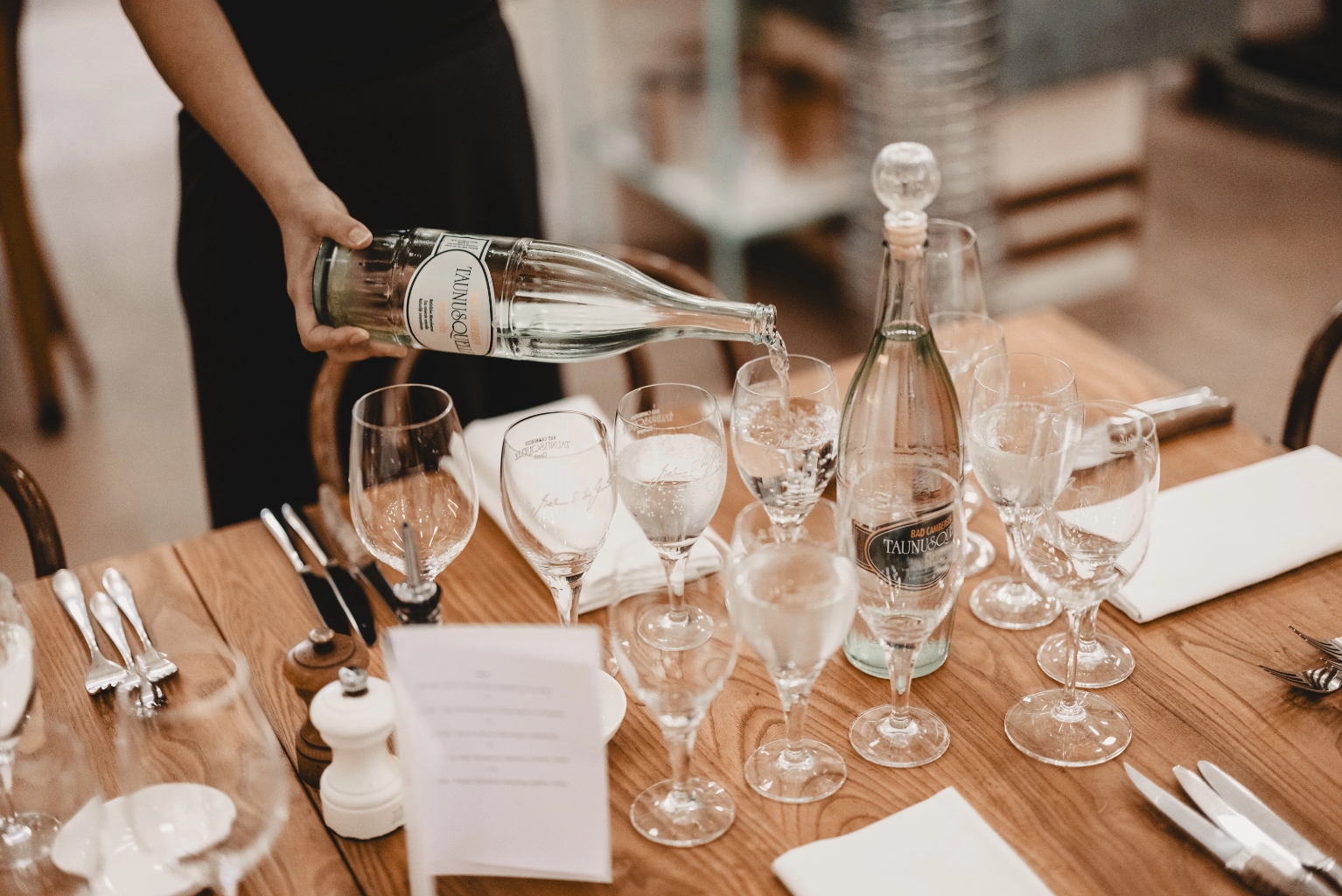
Thin-walled or thick-walled? The subtle power of touch
In addition to shape, the thickness of the glass wall also plays an underestimated role. Thin-walled glasses appear lighter and make the water appear more direct. They enhance the fine texture, make the perlage of Taunusquelle Medium even more lively, and emphasize the clear structure of Taunusquelle Classic. Thick-walled glasses, on the other hand, retain the temperature longer, feel calmer, and provide a softer mouthfeel. Especially with the still and particularly gentle Taunusquelle Naturelle, this type of glass ensures a round, almost velvety perception.
Surface structure and glass opening: Small details, big impact
Even seemingly minimal details such as the inner surface or the opening noticeably change the sensory experience. Smooth inner surfaces make the bubbles appear more orderly and convey an elegant, refined impression. Glasses with a slight structure or ribbing on the inside appear more lively: the bubbles literally dance in the glass, making the impression more direct and dynamic. A wide opening distributes the water more widely in the mouth, intensifying the taste. A narrower opening, on the other hand, directs the flow in a more focused manner, creating a precise, cooler mouthfeel.
Ultimately, the way mineral water is perceived is a combination of temperature, shape, wall thickness, structure, and opening of the glass. And depending on how all these factors interact, even a familiar water from the Taunus spring can taste a little different each time—sometimes powerful, sometimes delicate, sometimes soft, sometimes lively.
More guides
Experience the preciousness
of the senses on Instagram